





















What you can’t see is costing you more than you think
Healthcare supply chains operate under a unique combination of pressures that most other industries don’t face: patient safety requirements, strict regulatory compliance, perishable and high-value inventory, and the operational reality that a missing item isn’t just an inconvenience — it can directly affect care.
Despite those stakes, many hospital systems still rely on manual tracking processes and fragmented tools that leave significant visibility gaps across receiving, storage, sterilization, and distribution. The result is a set of problems that show up quietly but accumulate into significant cost: missing inventory that holds up procedures, expired products that have to be written off, and staff spending time locating items that should already be accounted for.
The four places visibility breaks down
In most hospital supply chain environments, the breakdown isn’t in any single place. It’s the accumulation of gaps across the full chain:
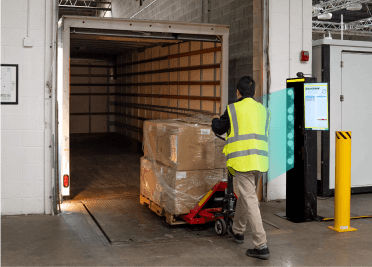
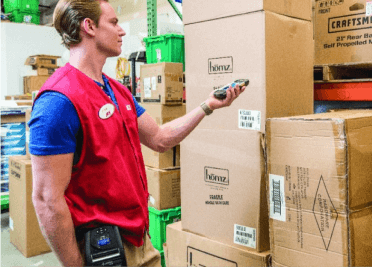
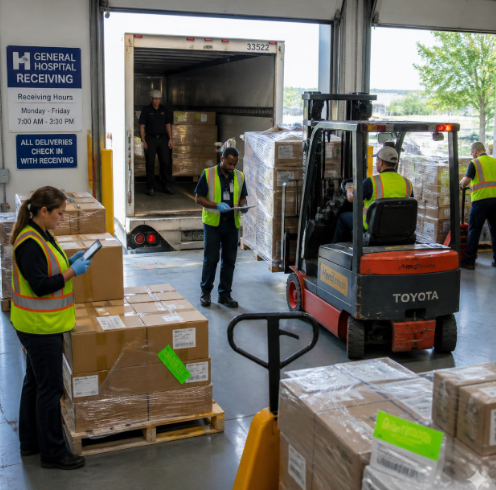
- Receiving and intake: without mobile scanning at the dock, supplier verification is manual and error-prone. Wrong products, incorrect lots, and damaged items can enter inventory undetected.
- Sterile processing and surgical kits: tracking sterilization cycles and kit readiness without RFID or automated verification creates dependency on institutional knowledge rather than systems. When staff turns over, that knowledge walks out the door.
- Point-of-use and storage: without real-time inventory visibility, expiration alerts, and usage tracking at the point of care, products expire before they’re used or go missing between receiving and deployment.
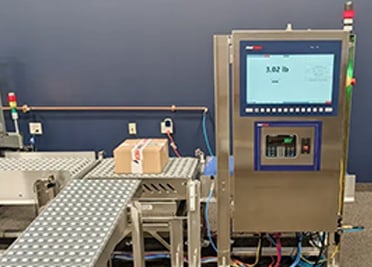
- Shipping and OR delivery: manual kit staging and pick verification for the operating room introduces risk. A wrong kit to the OR isn’t a supply chain problem — it’s a patient safety problem.
- A large hospital system achieved a 40% reduction in inventory write-off through real-time lot tracking
- A surgical services team eliminated manual kit staging and reached 99.8% accuracy in OR material verification
- A pharmacy network used expiration alerting to catch more than $2 million in waste before products reached patient distribution
- A sterile processing department reduced reprocessing errors by 35% through RFID cycle tracking
- During the COVID-19 pandemic, a rapid PPE visibility system was deployed across 15 facilities in under six weeks
What the gap actually costs
The costs of supply chain blind spots in healthcare show up across the income statement in ways that aren’t always connected back to their root cause. Inventory write-offs from expired or missing products. Labor hours spent on manual tracking processes that automated systems would handle continuously. Reprocessing errors in sterile processing that result from incomplete cycle tracking. And compliance exposure from regulatory requirements around lot segregation, track and trace, and cold chain documentation.
Healthcare supply chain teams are often managing these costs individually — addressing inventory waste in one initiative, compliance documentation in another, OR delivery accuracy in a third — without the unified visibility that would let them understand how they connect and address them together.
|
Manual tracking and inventory visibility gaps create patient delays and safety risks. Fragmented tools across receiving, storage, sterilization, and distribution compound the problem — and the cost. |
What integrated visibility actually looks like
Real supply chain visibility in a healthcare environment means more than a software dashboard. It means the right data being captured at every point in the chain — receiving, storage, point of use, OR delivery — and that data flowing into a unified system that can generate alerts, support compliance reporting, and give operations teams a live picture of inventory status across the facility.
That requires the right combination of hardware, software, and integration work. Mobile scanning at the dock for receiving verification. RFID tracking for surgical kits and sterilization cycles. Real-time alerts for expiration and lot discrepancies. Automated verification at the OR to confirm kit accuracy before procedures.
AbeTech’s Connected Operations model was built specifically for this kind of multi-point visibility. The workflow covers every handoff in the chain: receive, track, verify, and ship — with healthcare-specific applications at each stage, from medical supply intake through sterile inventory management, lot tracking, expiration compliance, and OR delivery verification.
The compliance dimension
Visibility isn’t only an operational efficiency question in healthcare. It’s a regulatory one. Requirements around FSMA compliance, track and trace, lot segregation, and cold chain documentation require an audit trail that manual processes struggle to maintain reliably. An integrated visibility system generates that documentation automatically as a byproduct of normal operations — rather than requiring a separate compliance effort layered on top of an already strained team.
What the results look like in practice
AbeTech has deployed integrated supply chain visibility solutions across healthcare environments. The outcomes from those deployments reflect what becomes possible when the right technology is implemented correctly:
These results reflect what becomes achievable when visibility, hardware, and integration are working together across the full supply chain — not just at a single checkpoint.
Where to start
For most healthcare supply chain teams, the path to integrated visibility doesn’t begin with a full-facility deployment. It begins with an honest assessment of where the current process breaks down most frequently and most expensively — and a proof of concept in that area that demonstrates measurable value before broader rollout.
AbeTech’s engagement process starts exactly there: mapping your receiving, storage, and distribution workflows; identifying pain points and compliance gaps; and designing a solution grounded in your actual environment rather than a generic template.
Schedule a Supply Chain Visibility Review with AbeTech