



















The problem looked simple. The solution changed everything.
Scanning pallets before they leave a facility sounds straightforward. Run a scanner over the cases, confirm the contents, move on. In practice, it rarely works that way.
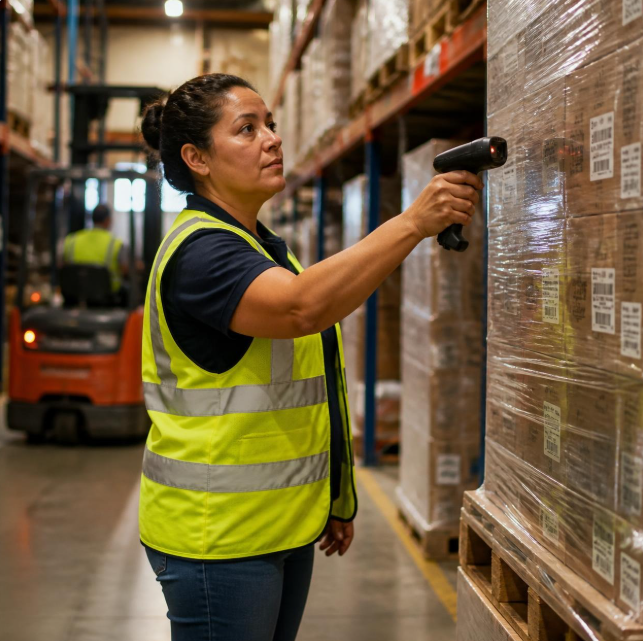
For one AbeTech client, the process looked like this: between 48 and 120 cases on a pallet, every one requiring a manual scan. An operator standing in an active forklift zone, scanner in hand, methodically working through each label. Time studies showed the process was averaging 90 seconds per pallet.
Ninety seconds of labor per pallet. In a busy facility, that adds up quickly. But the bigger problem wasn’t the time.
The hidden cost: safety
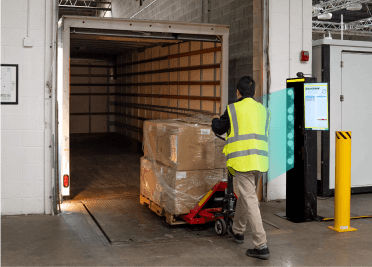
The operator scanning those pallets wasn’t standing in an office. They were in a high-traffic forklift area, stationary, focused on a handheld scanner, surrounded by moving equipment.
This is a common scenario in distribution centers, and it’s exactly the kind of situation safety teams lose sleep over. The risk is real, and it’s compounded by everything that makes peak season difficult: temporary workers less familiar with the facility, longer shifts, higher traffic volumes, and the general pressure to move faster.
The solution: Gatekeeper Rotary
AbeTech implemented the Gatekeeper Rotary — a scan tower integrated with the facility’s existing stretch-wrap process. As the pallet spins during wrapping, the system captures all case barcodes in a single revolution, associates them with a pallet license plate ID, and confirms the scan is complete.
The result: the entire scan process now happens in under 10 seconds. Not as a separate step requiring an operator to be present — but during a process the facility was already doing.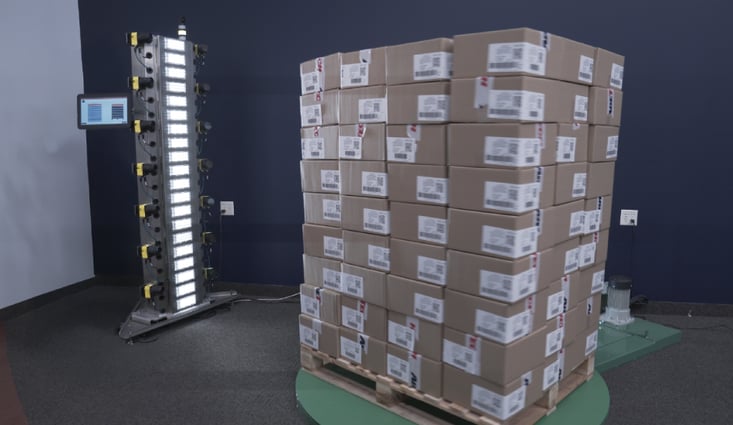
The operator is no longer in the forklift zone. The scan happens automatically. The data flows directly into the WMS.
The numbers
- Before: ~90 seconds per pallet, operator in forklift traffic
- After: under 10 seconds, fully automated during stretch-wrap
- Safety benefit: operator removed from high-risk forklift zone
- Downstream benefit: single license plate scan replaces case-by-case scanning at dock or next location
What made it work
The Gatekeeper Rotary works because it integrates into a process that was already happening. The facility didn’t add a step — it automated one. That’s the model that tends to deliver the strongest ROI in warehouse automation: find the bottleneck, understand the existing workflow, and find a way to automate within it rather than around it.
It also demonstrates something worth noting for facilities evaluating automation: the business case doesn’t always start with throughput. In this case, the safety improvement alone justified the investment for many stakeholders. The time savings reinforced it.
If your facility has operators performing repetitive scanning tasks in areas with forklift traffic, that's a conversation worth having. AbeTech can walk your process, identify the risk, and show you what automation within your existing workflow would look like. 👉 Talk to an AbeTech expert