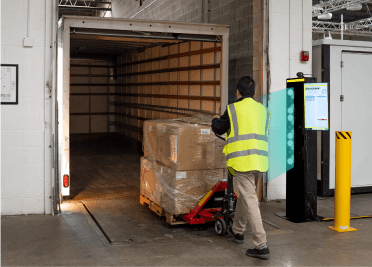

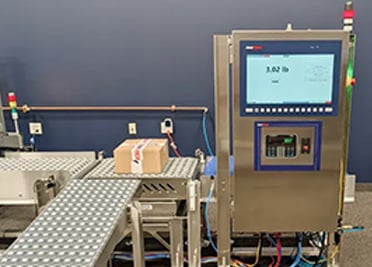




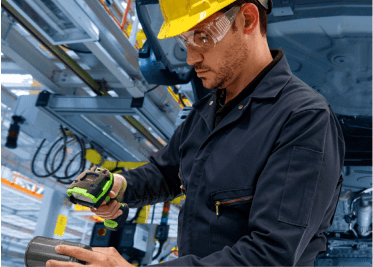








Warehouse, manufacturing, and logistics operations have never been more connected. Mobile computers, barcode scanners, RFID readers, printers, sensors, AMRs, AGVs, voice systems, warehouse management software, wireless networks, and cloud applications all work together to keep products moving.
When everything is working, these technologies create incredible efficiency.
When something isn't working, finding the root cause can feel nearly impossible.
A scanner slows down. Workers report disconnects. Transactions take longer than expected. Inventory updates lag. Productivity drops.
The challenge is that the visible problem is rarely the actual problem.
The Growing Complexity of Modern Operations
A decade ago, troubleshooting technology was often straightforward.
Today, a single warehouse transaction may pass through:
- A mobile device
- A wireless network
- Multiple access points
- A WMS platform
- Backend servers
- ERP systems
- Middleware applications
- Cloud services
If performance suffers at any point in that chain, workers experience delays. Unfortunately, most organizations have visibility into only pieces of the environment.
IT may monitor network performance.
Operations may track productivity.
Application teams may monitor software.
Device administrators may watch hardware.
But few organizations have a complete view of how all these systems interact.
As a result, technology issues often become finger-pointing exercises rather than problem-solving exercises.
Why "It's a Wi-Fi Problem" Is Often Wrong
When devices disconnect or applications become slow, wireless networks often receive the blame.
Sometimes that's accurate. Often it isn't.
A performance issue could be related to:
- Device firmware
- Application updates
- Server response times
- Database performance
- Configuration changes
- Authentication delays
- Infrastructure bottlenecks
- Workflow design challenges
The reality is that many operational problems are multi-layer issues involving several systems working together.
Looking at only one layer rarely reveals the complete story.
Organizations that can see across devices, networks, applications, and workflows are far more effective at identifying root causes and resolving issues quickly.
The Cost of Operating Without Visibility
Many organizations don't realize they have a visibility problem until productivity begins to suffer.
Without visibility, teams often experience:
- More troubleshooting time
- Increased support costs
- Longer issue resolution cycles
- Reduced worker productivity
- More operational disruptions
- Greater technology frustration
- Limited confidence in performance data
The cost is rarely a single outage. The cost is the accumulation of small inefficiencies that occur every day.
A few seconds added to a transaction.
A device reboot.
A delayed connection.
A slow application response.
Individually, these issues appear insignificant.
Across hundreds of workers and thousands of transactions, they become operationally expensive.
Visibility Creates Better Decisions
The most successful operations don't simply collect data.
They understand what normal looks like.
Establishing a baseline allows organizations to identify:
- Performance degradation
- Device issues
- Application slowdowns
- Wireless coverage concerns
- Network anomalies
- Environmental changes
Without a baseline, teams only react after a problem becomes visible.
With a baseline, they can identify trends early and address issues before they impact productivity.
This shift from reactive support to proactive management is one of the biggest opportunities available to operations leaders today.
Why Continuous Data Matters
Many organizations still rely on periodic assessments, reports, and snapshots.
While these activities provide valuable information, they don't always reveal what is happening between reporting periods.
Modern operations require continuous visibility.
Technology environments are constantly changing:
- Software updates are deployed.
- Devices are added or replaced.
- Network configurations evolve.
- New workflows are introduced.
- Automation systems are expanded.
Without continuous monitoring, organizations often discover issues only after users begin reporting them.
The goal is not simply to collect more data.
The goal is to create trusted operational intelligence that helps teams make better decisions faster.
The Link Between Visibility and AI Readiness
Many organizations are exploring artificial intelligence, predictive analytics, and advanced automation initiatives.
What often gets overlooked is that these technologies depend on reliable operational data.
AI systems are only as effective as the information feeding them.
If organizations lack consistent visibility into devices, networks, workflows, and operational performance, they may struggle to generate meaningful insights from AI initiatives.
Before organizations can fully leverage AI, they need confidence in their operational data.
That starts with visibility.
The companies best positioned for future AI adoption are investing in operational intelligence today.
Technology Problems Are Often Communication Problems
Technology challenges aren't always technology failures.
Many are communication failures.
Operations teams may see the symptoms.
IT teams may understand infrastructure.
Application teams may understand software.
Vendors may see only their portion of the environment.
When these groups work independently, root causes can remain hidden.
When they share data and collaborate around a common view of operational performance, problems become easier to identify and resolve.
The right data is important.
The right conversations are equally important.
Building a Smarter, More Resilient Operation
Modern warehouses and manufacturing facilities generate enormous amounts of operational data.
The challenge isn't collecting more information.
The challenge is turning that information into visibility, insight, and action.
Organizations that invest in visibility gain the ability to:
- Resolve issues faster
- Improve workforce productivity
- Support automation initiatives
- Strengthen operational resilience
- Improve user experience
- Reduce downtime
- Establish a foundation for future AI initiatives
In an increasingly connected operation, visibility is no longer a luxury.
It's a competitive advantage.
How AbeTech Helps
AbeTech helps warehouse, manufacturing, and logistics organizations gain greater visibility into the technologies that drive their operations.
From mobile computing and RFID to wireless infrastructure, automation, and device lifecycle management, AbeTech helps organizations identify performance gaps, improve operational reliability, and create a stronger foundation for future growth.
The result is a more connected, informed, and resilient operation.
How Much Visibility Do You Really Have?
If a critical workflow slows down today, would your team know why?
AbeTech's Technology Experience Assessment helps organizations evaluate device performance, wireless infrastructure, operational workflows, and technology dependencies to identify hidden risks and improvement opportunities.
Schedule a Technology Experience Assessment today and discover how greater visibility can improve productivity, reduce disruptions, and prepare your operation for the future.