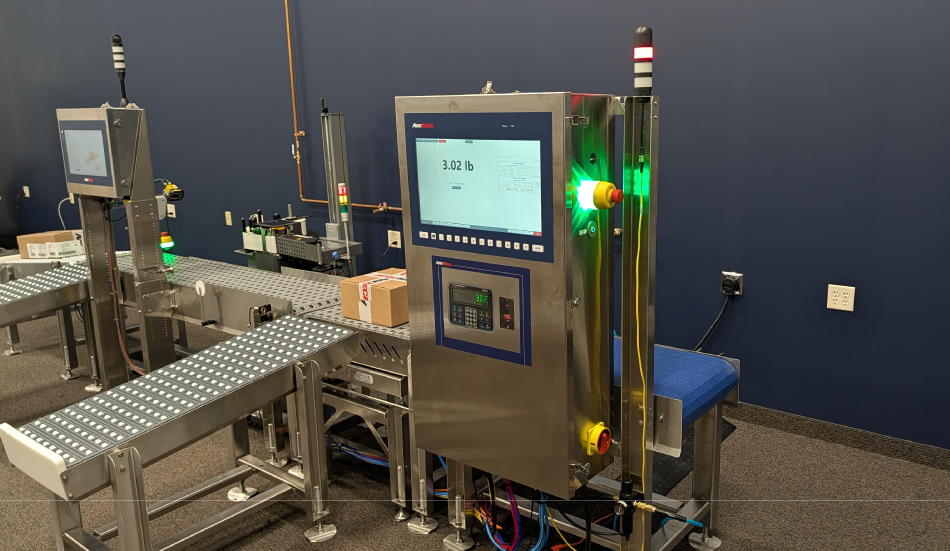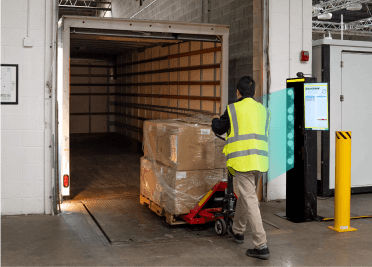


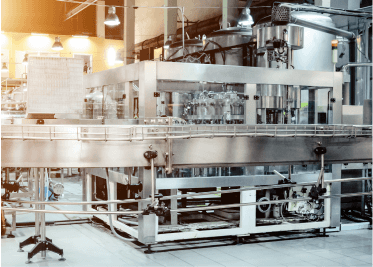


















As labor costs rise, customer labeling requirements become more complex, and supply chains demand greater accuracy, manufacturers are looking for ways to automate manual packaging and shipping processes.
One of the most effective solutions is a print and apply system.
From case labeling and pallet identification to shipping compliance and traceability, print and apply technology helps manufacturers improve efficiency, eliminate labeling errors, and support operational growth.
But what exactly is a print and apply system, and how can it improve your operation?
What Is a Print and Apply System?
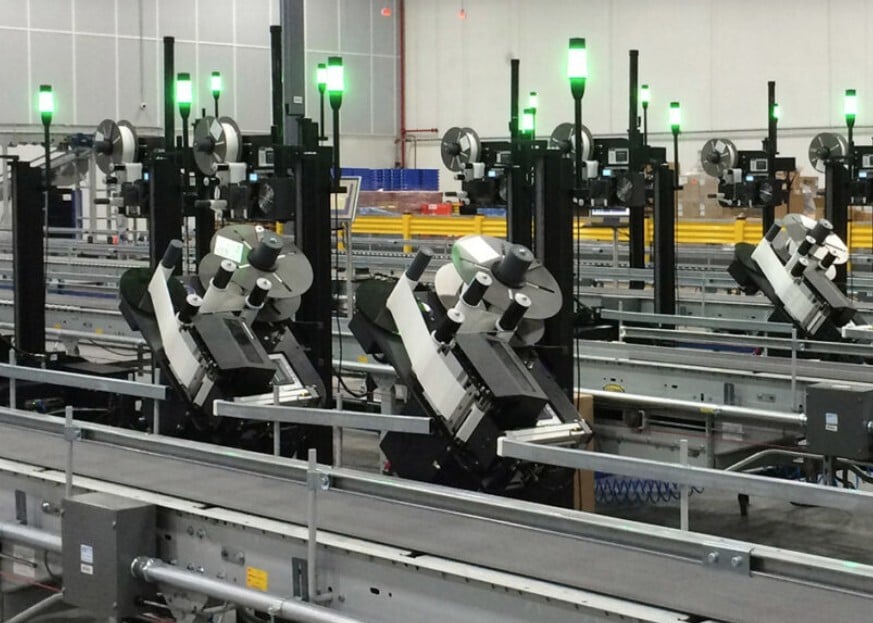
A print and apply system automatically prints and applies labels to products, cartons, totes, cases, or pallets as they move through production, packaging, warehouse, or shipping workflows.
Instead of relying on operators to manually print and place labels, the system performs both tasks automatically using real-time operational data.
This ensures every item receives the correct label at the correct location and at the correct time.
Manufacturers use print and apply systems to improve:
- Labeling accuracy
- Production throughput
- Shipping readiness
- Inventory visibility
- Product traceability
- Labor efficiency
- Compliance with customer and retailer requirements
How Does a Print and Apply System Work?
The process is simple but highly effective:
- A product, case, tote, or pallet enters the labeling station.
- The system receives data from an ERP, WMS, MES, shipping software, or other business system.
- A label is printed on demand using current operational information.
- The label is automatically applied to the designated surface.
- Verification processes can confirm the correct label was applied.
The entire process occurs in seconds without requiring operator intervention.
Where Are Print and Apply Systems Used?
Print and apply technology is commonly used throughout manufacturing, warehouse, and distribution environments.
Typical applications include:
- Case labeling
- Carton labeling
- Tote labeling
- Pallet labeling
- Product identification
- Packaging operations
- Warehouse fulfillment
- Shipping departments
- Distribution centers
- Retail compliance programs
Any operation that relies on accurate product identification and traceability can benefit from automated labeling.
Why Are Manufacturers Automating Labeling?
Manual labeling introduces several challenges:
- Labor-intensive processes
- Inconsistent label placement
- Incorrect labels
- Shipping delays
- Rework costs
- Customer compliance issues
As volumes increase, even small labeling errors can create significant operational disruptions.
Automated print and apply systems help eliminate these challenges by creating a consistent, repeatable labeling process that scales with production demands.
What Features Should You Look for in a Print and Apply System?
Not all labeling systems deliver the same level of performance or flexibility.
When evaluating a solution, manufacturers should look for the following capabilities:
On-Demand Label Printing
Labels should be generated using real-time production, inventory, or shipping data rather than relying on preprinted labels or static print queues.
This reduces errors and ensures each label contains accurate information.
Automated Inline Application
The system should automatically apply labels as products move through the production or packaging process without interrupting throughput.
Flexible Label Templates
Manufacturers often support multiple customers, products, and facilities.
A flexible system can manage multiple label formats, templates, and business rules to accommodate changing requirements.
Exception Management
Labeling processes should include predefined workflows for:
- Reprints
- Rejects
- Missing labels
- Rework situations
Exception handling helps maintain productivity while reducing operator confusion.
Verification and Validation
Many manufacturers implement barcode scanning and verification processes to ensure the correct label has been printed and applied before products leave the facility.
This additional validation can significantly reduce labeling errors and downstream costs.
Operator-Friendly Design
The best systems simplify setup, media replenishment, maintenance, and daily operation.
A user-friendly design helps minimize training requirements and improve adoption on the production floor.
How Do Print and Apply Systems Improve Traceability?
Traceability has become a critical requirement across manufacturing, food processing, medical device production, distribution, and logistics operations.
Print and apply systems support traceability by automatically labeling products with key information, including:
- Lot numbers
- Batch numbers
- Serial numbers
- Shipping information
- Customer-specific identifiers
- Product details
Automated labeling helps create a digital trail that improves visibility throughout the supply chain and supports quality, compliance, and recall initiatives.
What Are the Benefits of a Print and Apply System?
Manufacturers often see improvements in several areas:
Increased Throughput
Automated labeling keeps products moving without requiring manual intervention.
Improved Accuracy
Consistent label generation and placement reduce costly shipping and identification errors.
Better Traceability
Real-time labeling supports product tracking and inventory visibility.
Reduced Labor Requirements
Automation eliminates repetitive manual labeling tasks and allows employees to focus on higher-value activities.
Stronger Customer Compliance
Many retailers, distributors, and customers require specific label formats and placement standards. Automated systems help ensure those requirements are consistently met.
Why Partner With AbeTech?
Successful print and apply deployments involve more than selecting hardware.
Manufacturers need a solution that integrates with existing workflows, data systems, packaging processes, and operational goals.
AbeTech designs, integrates, and supports complete print and apply solutions, including:
- Labeling workflows
- Printer and applicator selection
- System integration
- Label business rules
- Verification processes
- Operational station design
The goal is simple: improve throughput, increase labeling accuracy, strengthen traceability, and reduce manual touchpoints throughout production, packaging, warehouse, and shipping operations.
Frequently Asked Questions
What is the difference between print and apply and manual labeling?
Manual labeling requires operators to print and place labels by hand. Print and apply systems automate both processes, improving speed, accuracy, and consistency.
Can print and apply systems integrate with ERP or WMS software?
Yes. Modern systems commonly integrate with ERP, WMS, MES, shipping, and warehouse management platforms to generate labels from real-time operational data.
Are print and apply systems suitable for pallet labeling?
Absolutely. Pallet labeling is one of the most common applications and helps ensure shipments meet customer and retailer compliance requirements.
How do print and apply systems improve traceability?
They automatically apply labels containing lot, batch, serial, and shipment information, creating a more accurate tracking process throughout the supply chain.
Can print and apply systems help reduce labor costs?
Yes. By automating repetitive labeling tasks, manufacturers can reduce manual labor requirements while improving productivity and consistency.
Eliminate Labeling Errors and Improve Operational Efficiency
Manual labeling slows production, creates opportunities for mistakes, and limits scalability.
AbeTech helps manufacturers implement integrated print and apply solutions that automate labeling, improve traceability, and keep products moving through production, packaging, and shipping operations.
Ready to automate your labeling process?