





















Medical device manufacturing depends on precision, traceability, and compliance. Products often move through multiple stages before shipment, including production, inspection, quality assurance, staging, packaging, and distribution.
While each step may be carefully managed, visibility between those steps is often limited.
A finished device may be ready to ship but difficult to locate. Inventory may be physically moved before systems are updated. Teams may spend valuable time searching for products, verifying locations, or reconciling inventory records before orders can leave the facility.
These are not always process failures.
More often, they are visibility gaps.
RFID helps medical device manufacturers gain greater visibility across production, staging, inventory, and shipping workflows, helping reduce delays, improve traceability, and support compliance requirements.
The Visibility Problem Between Process Steps
Most medical device manufacturers already have established processes and documented workflows. The challenge is that physical movement often happens faster than system updates.
This creates disconnects between:
- Production completion and inventory availability
- Quality approval and staging
- Staging and shipment
- Physical location and system location
- Finished goods and customer delivery timelines
When teams cannot see exactly where products, components, or assets are located, they spend time searching, confirming, and reconciling information.
That slows operations, impacts productivity, and introduces unnecessary friction into the workflow.
In regulated environments, limited visibility can also create documentation and traceability challenges.
The Cost of Limited Visibility
When products cannot be located quickly, the impact extends beyond the warehouse floor.
Limited visibility can contribute to:
- Delayed shipments
- Additional labor spent searching for inventory
- Inventory inaccuracies
- Reduced production efficiency
- Compliance documentation challenges
- Lower customer satisfaction
- Increased operational costs
The larger and more complex the operation, the more costly these visibility gaps can become.
Why Locate-to-Ship Workflows Matter
Locate-to-ship refers to the process of finding the correct product, confirming its readiness, and moving it toward shipment.
For medical device manufacturers, locate-to-ship speed can directly affect:
- Order fulfillment
- Customer commitments
- Inventory planning
- Production flow
- Internal coordination
- Regulatory compliance documentation
When visibility is limited, teams often spend time manually confirming inventory locations before shipments can proceed.
That extra effort increases cycle times and creates opportunities for errors.
RFID helps reduce that friction by improving the ability to identify, locate, and verify inventory more efficiently.
Where Barcode-Only Tracking Can Fall Short
Barcode systems are valuable and widely used throughout medical device manufacturing operations.
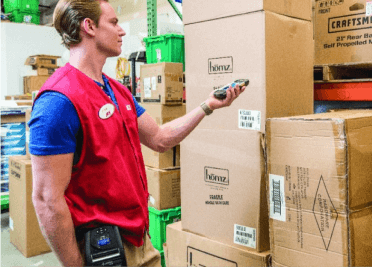
However, barcode tracking relies on line-of-sight scanning and manual interaction.
Visibility challenges can arise when:
- Items move without being scanned
- Multiple products need to be identified quickly
- Staff must scan items individually
- Products are staged across multiple locations
- Inventory moves between departments
- Teams rely on manual updates after movement
RFID can complement existing barcode systems by supporting workflows where manual scanning creates bottlenecks or limits visibility.
This is not an either-or decision. Many organizations use barcode and RFID together to improve operational visibility.
How RFID Supports Production-to-Shipment Visibility
RFID helps medical device manufacturers gain insight into inventory movement throughout key workflow stages.
Production
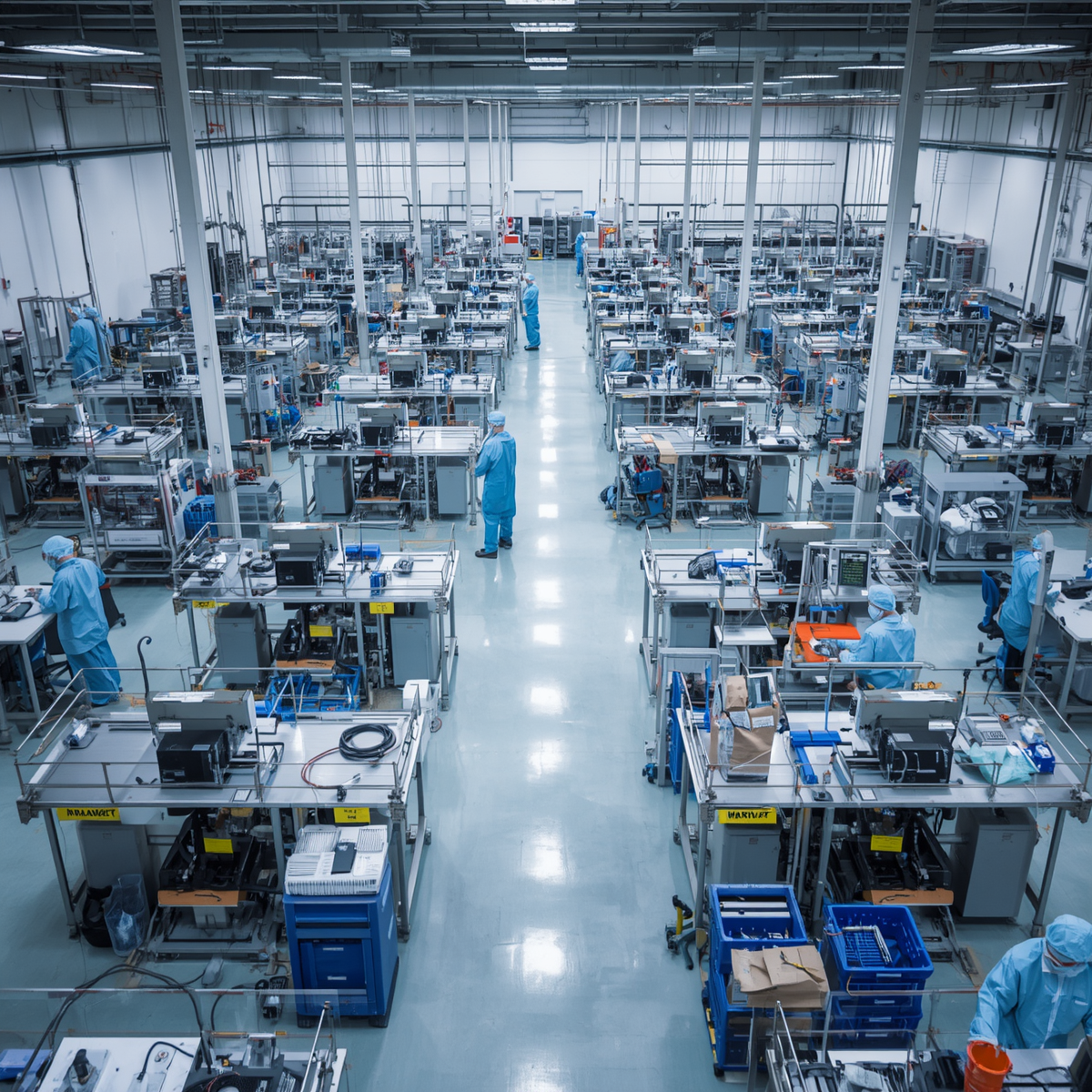
RFID can improve visibility into the movement of products, components, tools, and work-in-process inventory throughout manufacturing operations.
Quality Assurance
For workflows requiring inspections, testing, or validation, RFID can support traceability and help document product movement through required process steps.
Staging
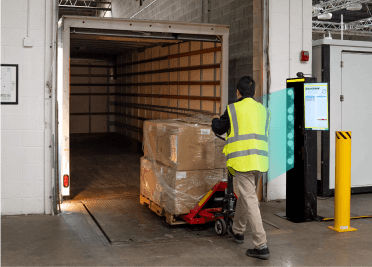
Staging areas are often where visibility gaps emerge. RFID can help teams locate finished goods more quickly and reduce time spent searching for products awaiting shipment.
Shipping
RFID can help verify that the right inventory is available, accurately identified, and ready to move through outbound shipping processes.
Post-Process Analysis
RFID data can provide insight into movement patterns, bottlenecks, delays, and workflow opportunities for continuous improvement.
Operational Benefits of RFID in Medical Device Manufacturing
Know Where Inventory Is Located
RFID improves visibility into the location of finished goods, components, and critical assets throughout the facility.
Reduce Inventory Discrepancies
Automated identification can help reduce errors caused by manual tracking and delayed system updates.
Spend Less Time Searching
Improved visibility means teams spend less time locating products and more time moving work forward.
Accelerate Locate-to-Ship Workflows
Better inventory awareness can help shorten the time between product readiness and shipment.
Support Traceability and Compliance
Accurate movement data can strengthen audit readiness and support documentation requirements in regulated environments.
RFID Is Most Effective When Tied to a Specific Workflow Problem
The most successful RFID deployments focus on solving a clearly defined business problem.
Common starting points include:
- Finished goods location tracking
- High-value asset tracking
- Inventory discrepancy reduction
- Staging area visibility
- Serialized product tracking
- Shipping verification support
- Compliance-focused traceability workflows
The clearer the operational challenge, the easier it becomes to define success and measure results.
Starting with a Focused RFID Pilot
Medical device manufacturers do not need to implement RFID across every process from day one.
A focused RFID pilot helps answer important questions such as:
- Which products or assets should be tagged?
- Where are the largest visibility gaps occurring?
- How will RFID fit within existing workflows?
- What data should be captured?
- What operational improvements justify expansion?
Starting small allows organizations to validate use cases, reduce risk, and build confidence before scaling.

Why Medical Device Manufacturers Work with AbeTech
Successful RFID projects require more than tags and readers.
AbeTech helps medical device manufacturers identify visibility challenges, prioritize opportunities, and develop practical RFID strategies aligned with operational goals.
Our team can help:
- Analyze production-to-shipment workflows
- Identify inventory and asset visibility challenges
- Evaluate RFID opportunities
- Design pilot programs
- Select appropriate RFID hardware and software
- Define measurable success criteria
- Support deployment and expansion planning
The goal is not to deploy RFID everywhere at once.
The goal is to solve a specific business challenge and create a roadmap for future improvements.
Closing Visibility Gaps Creates Operational Advantages
In medical device manufacturing, products move through numerous processes before reaching customers. When visibility cannot keep pace with that movement, teams spend more time searching, confirming, and reconciling information instead of moving products efficiently through the supply chain.
RFID helps bridge those gaps.
By improving inventory visibility, supporting traceability, and reducing manual tracking efforts, RFID can help medical device manufacturers create faster, more accurate, and more controlled workflows from production through shipment.
For organizations seeking greater operational visibility, RFID is more than a tracking technology.
It is a tool for improving efficiency, compliance readiness, and supply chain performance.
Frequently Asked Questions About RFID in Medical Device Manufacturing
How is RFID used in medical device manufacturing?
RFID is used to improve visibility and traceability of products, components, tools, and inventory throughout production, quality assurance, staging, and shipping processes.
Can RFID improve inventory accuracy for medical device manufacturers?
Yes. RFID can help automate inventory identification and location tracking, reducing reliance on manual counts and improving inventory accuracy throughout manufacturing and distribution operations.
Does RFID replace barcode scanning?
Not necessarily. Many medical device manufacturers use RFID alongside barcode systems. RFID can automate location and movement tracking, while barcodes continue to support labeling and process verification.
Can RFID help support regulatory compliance?
RFID can improve traceability and movement visibility, helping organizations maintain more accurate records that support compliance and audit readiness efforts.
What is the best RFID use case for medical device manufacturers?
Many organizations begin with finished goods tracking, staging area visibility, inventory management, high-value asset tracking, or shipping verification because these areas often provide measurable operational improvements.
Find the Visibility Gaps in Your Workflow
If your team is losing time between production, quality assurance, staging, and shipment, RFID may help create a faster, more accurate workflow.
AbeTech can help evaluate where RFID fits best, identify visibility gaps, and define a practical first use case.
Start an RFID Workflow Assessment