



















The numbers sound like a case study someone invented to make a point. They aren't.
The problem with not knowing what's on your floor
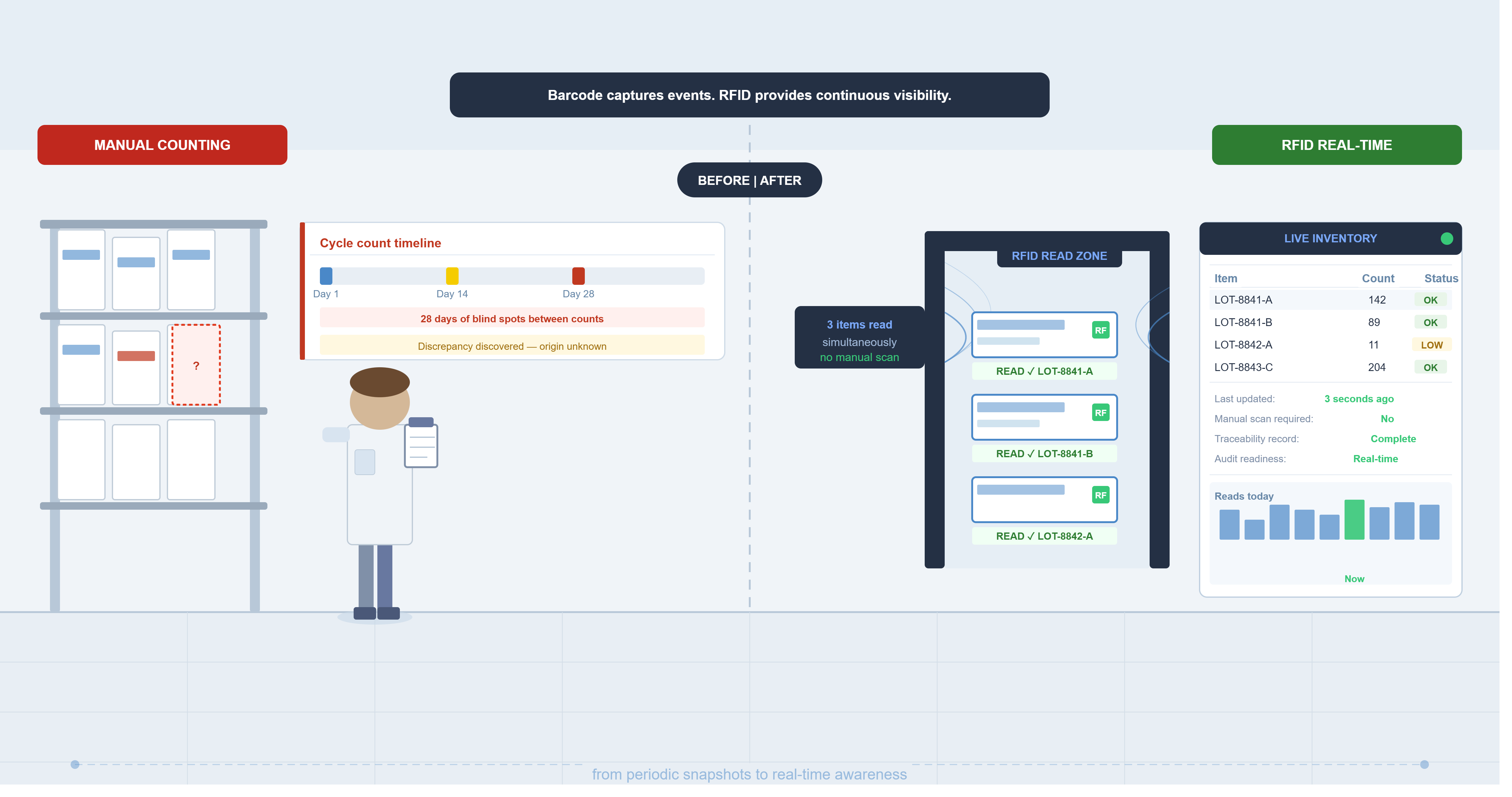
There's a rational response to not having real-time visibility into your floor inventory: carry more than you think you need. If you can't see exactly what's on hand, where it is, and how fast it's being consumed, a buffer is the only protection you have against a line stoppage.
It feels prudent. It's also expensive — and the cost is easy to undercount.
Carrying costs accumulate quietly. Tied-up capital doesn't appear on a line item labeled "cost of poor visibility." Space consumed by excess stock doesn't get attributed to a data problem. And the hours your team spends manually monitoring inventory levels, chasing down what's running low, and expediting replenishment don't show up on a dashboard anywhere.
For one manufacturer — this was the daily reality. They were deliberately over-inventorying their production floor because without visibility into exactly what was on hand and being consumed, they had no other way to protect the line. The buffer wasn't inefficiency. It was a rational response to uncertainty.
The goal was to eliminate the uncertainty.
What Was Implemented
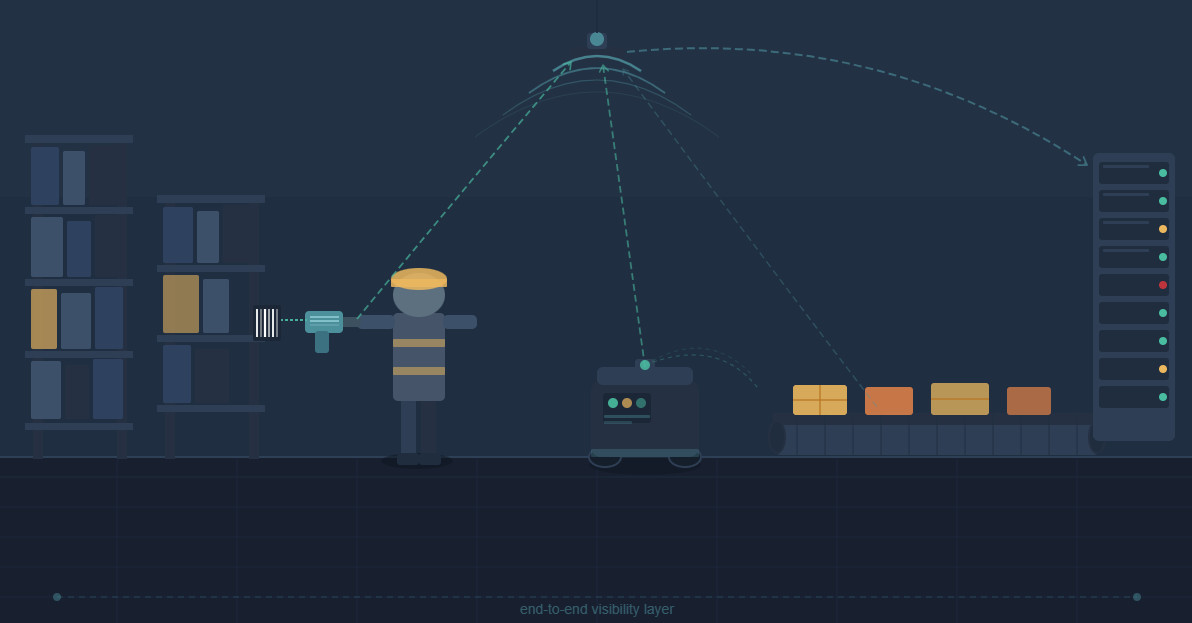
Xemelgo, AbeTech's RFID software partner of choice, provided the platform layer — translating every tag read into clean, structured inventory data and feeding it directly into the customer's existing ERP system. Replenishment triggers were configured at threshold levels, replacing manual monitoring with automated alerts that fired the moment stock hit reorder points
Together, the solution gave the manufacturer three capabilities they hadn't had before:
- Exact inventory on hand, by location, in real time — not a count from last Tuesday's cycle, but a live number updated continuously as stock moved
- Consumption data at the work cell level — what was being used, when, and at what rate, across every station on the floor
- Automated replenishment triggers — eliminating the manual monitoring, the guesswork, and the last-minute expediting that had become a normal part of operations
The results
The outcomes were significant enough to restate plainly:
Floor inventory reduced by 85%. Once the manufacturer could see exactly what they had and how fast they were consuming it, the buffer they'd been carrying collapsed. The excess stock that had felt necessary turned out to be a response to uncertainty — and once the uncertainty was gone, so was the need for the buffer. Capital freed up. Space reclaimed. Carrying costs dropped.
Build time cut from 7 days to 1 day. WIP visibility revealed something the team hadn't been able to see before: where in the build process work was actually stalling. Bottlenecks that had been invisible — dwell time at specific work cells, components arriving late to the line, handoffs that weren't happening on schedule — became visible and actionable. Eliminating them didn't require a process overhaul. It required knowing where to look.
These aren't marginal improvements. An 85% reduction in floor inventory changes the economics of the operation. A 7x improvement in build time changes what the business can commit to its customers — on lead times, on delivery windows, on responsiveness to demand changes.
How the project actually came together
Results like these don't happen by deploying technology and hoping for the best. They happen because the problem was defined clearly before anyone selected a solution.
The engagement followed a structured implementation approach: an initial discovery conversation to understand the business problem in depth, a facility walkthrough where engineers mapped the environment and identified the right technical approach, readability testing to validate tag and reader performance under real-world conditions, and a phased rollout that started with a controlled pilot before expanding across the floor.
That sequencing matters. The readability testing step alone has saved more than one project from expensive mid-deployment surprises — what works in a clean demo environment doesn't always work on a floor full of metal racking, forklifts, and RF interference. Validating performance before implementation begins is how you ensure the system does what it promised.
The internal team was aligned from the start too. Operations and IT were both part of the discovery process, both understood what the system would and wouldn't do, and both had clear ownership of their respective roles in the rollout. That alignment is consistently the difference between deployments that succeed and those that stall.
What this looks like for your operation
The specific numbers from this case study — 85% inventory reduction, 7-day-to-1-day build time improvement — reflect a specific problem in a specific environment. Your numbers will be different.
But the underlying dynamic is consistent: when manufacturers don't have real-time visibility into floor inventory and WIP movement, they compensate with buffers and manual oversight. Those buffers and that oversight have costs that are real even when they're hard to see on a spreadsheet.
If your facility is carrying more safety stock than you'd like because you can't trust your real-time counts — or if your build process has unexplained dwell time at work cells that nobody has been able to fully diagnose — these are exactly the problems RFID is built to solve.
The technology works. AbeTech and Xemelgo have deployed it in environments more complex than yours. The question is whether your problem is defined clearly enough to build toward a solution — and that's a conversation worth having before you commit to anything.
See what's possible in your operation
AbeTech offers a no-obligation RFID Assessment — a structured discovery session where our team walks your facility, maps your current inventory and WIP challenges, and gives you an honest picture of what a deployment would look like, what it would cost, and what the return would be.
No assumptions. No generic demos. A clear-eyed look at your specific environment and what's actually achievable.